With research or internal data, E2E could enhance your marketing performance using advanced analytics and machine learning models. By measuring campaign impact, identifying growth drivers, and optimizing product decisions, we convert complex data into clear actions—enabling sharper targeting, clear brand positioning, and sustained competitive advantage.
Principal Component PCA & Factor Analysis
About the analysis
PCA and factor analysis are dimension reduction techniques that help reveal underlying patterns in survey data by grouping related variables into common dimensions that influence customer preferences and behavior. It simplifies complex, multi-variable datasets and supports the identification of key variables such as customer-centric or product-centric variables.
Why should you consider it?
Consumer surveys are generally involved with a host of variables asked in different scenarios at multiple stages of customer touch points. This might result in a database with hundreds of variables to analyze and streamline at the processing back-end.
The PCA technique could identify the broader dimensions and data themes such as product satisfaction or customer experience, by further simplifying the consumer survey dataset to support more advanced analytics on consumer data.
How does it work?
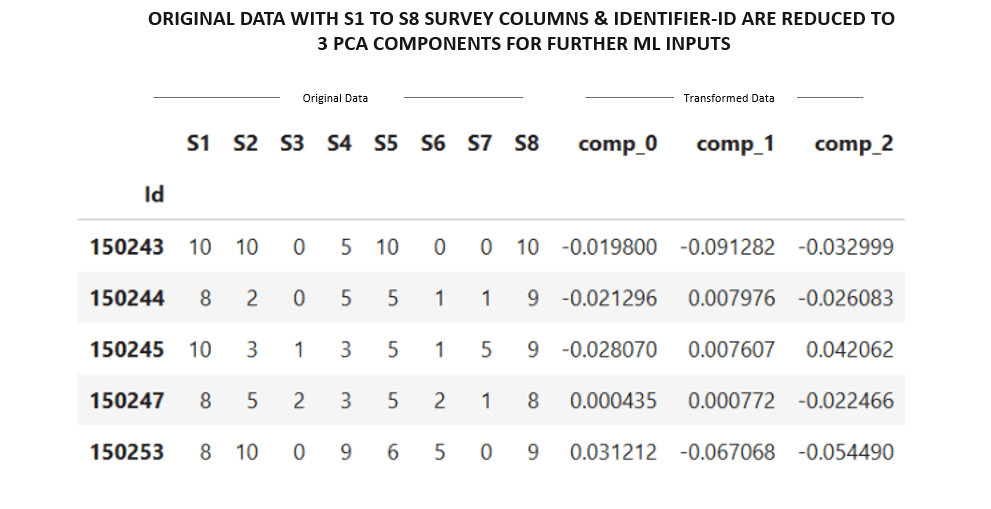
Variables associated with your research dataset are standardized by identifying the principal components. Accordingly, original data is transformed into these components to create a new and reduced attribute set. Coefficient scores could be used to identify the relevant groupings required on the original data.
How does the outcome benefit you?
Identifies customer behavior drivers, simplifies complex survey data, and uncovers trends for effective segmentation models.
With a reduced feature list, the results from principal component and factor analysis could be further used to build or use as input in supervised or unsupervised machine learning models.